
Summary of Key Points
- ABA therapy targets everyday skills like dressing, feeding, hygiene, and following routines, not only communication and behavior.
- These skills are taught by breaking daily routines into small, teachable steps a child can build on over time.
- A BCBA designs each daily living skill goal around a child’s current abilities and the family’s actual routines at home.
- Progress with daily living skills often happens gradually, through consistent practice rather than one big breakthrough.
- Parents play a central role in reinforcing these skills between sessions, since daily routines happen constantly at home.
- In-home ABA therapy gives Charlotte families a natural setting to practice these skills in the same spaces where they matter most.
Getting dressed, brushing teeth, and sitting down for a meal make up much of a child’s day. For many children with autism, these ordinary routines can also be some of the hardest skills to build. Charlotte parents often start ABA therapy focused on communication or behavior goals, then discover that some of the most meaningful progress happens around daily routines instead.
Daily living skills, sometimes called adaptive or self-help skills, cover everything from dressing and hygiene to following a bedtime routine. Many families choose ABA therapy in Charlotte, NC specifically because these skills are easiest to teach in the space where they will actually be used, which is usually the child’s own home. This guide walks through how ABA therapy approaches daily living skills, what progress typically looks like, and how parents can reinforce these skills every day.
What Are Daily Living Skills, and Why Do They Matter?
Daily living skills are the everyday tasks that support a child’s independence and participation in family life. This includes getting dressed, eating meals, using the bathroom, brushing teeth, and following simple routines like getting ready for bed.
These skills matter because they affect a child’s daily life far more often than many other goals. A child works on communication goals for an hour of therapy, but dressing happens every morning and hygiene routines happen multiple times a day. Building these skills reduces stress for the whole family and gives a child more independence in situations that come up constantly.
How ABA Therapy Breaks Daily Living Skills Into Manageable Steps
Daily living skills rarely click all at once. A skill like getting dressed actually involves many smaller steps, including recognizing clothing items, sequencing the steps in order, and managing fasteners like buttons or zippers.
ABA therapy addresses this by breaking a larger routine into smaller, teachable pieces, then building them back together once each piece is mastered. This approach, often called task analysis, lets a child experience success at each stage instead of facing an entire routine as one overwhelming task. A therapist may start by teaching just one step, like putting on a shirt, before layering in the next step in the sequence.
Common Daily Living Skills Charlotte Families Work On
While every child’s goals look different, a few daily living skills come up often in ABA therapy programs. These include:
- Getting dressed and undressed independently
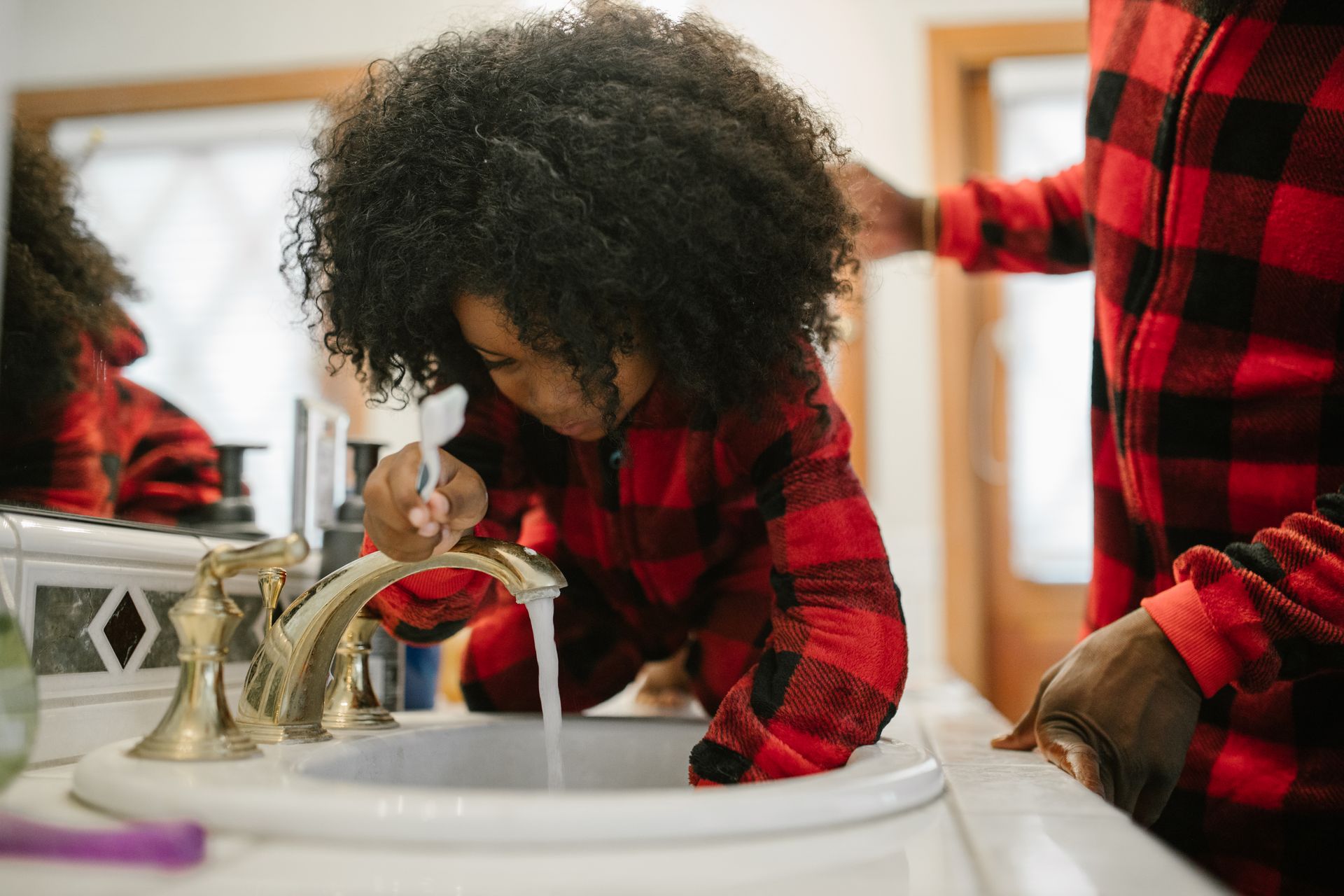
- Brushing teeth and washing hands
- Using utensils and drinking from an open cup
- Toileting routines and related independence skills
- Following a consistent bedtime or morning routine
- Tolerating haircuts, nail trims, or other grooming tasks
Why Progress Can Look Different from Child to Child
Two children working on the same daily living skill can progress at very different speeds, and that is normal. A child’s motor skills, sensory sensitivities, and comfort with a given routine all affect how quickly a skill develops.
A BCBA accounts for these differences when writing goals, which is one reason cookie-cutter programs rarely work well for daily living skills. If your child also has an IEP, some of these same skills may already show up as goals there, and coordinating ABA therapy and your child’s IEP can help keep expectations consistent between home, school, and therapy.
How Parents Reinforce Daily Living Skills at Home
Daily living skills improve fastest when they are practiced far more often than during scheduled therapy sessions. Parents can reinforce progress by:
- Using the same steps and language the therapist uses for a given routine
- Allowing extra time for a child to practice a skill independently, even if it is slower
- Offering praise for partial steps completed correctly, not just the finished routine
- Sharing what works and what does not with the therapy team regularly
This kind of consistency is part of why parent involvement is built into every Lighthouse ABA program from the very first month of ABA therapy, not added in later once a child has already started.
How Lighthouse ABA Supports Charlotte Families With Daily Living Skills
Every program at Lighthouse ABA is designed and supervised by a Board Certified Behavior Analyst, so daily living skill goals are built around your child’s actual routines rather than a generic checklist. Data is collected consistently, which means goals can be adjusted as your child masters each step.
The Behavior Analyst Certification Board sets the training and ethical standards every BCBA must meet, which is part of why families can expect a consistent, data-driven approach to daily living skills no matter which BCBA leads their child’s program.
Frequently Asked Questions
How long does it take to see progress with daily living skills?
Timelines vary by child and by skill. Simpler routines may show progress within a few weeks, while more complex skills, like full dressing independence, can take longer and typically improve in small, measurable steps.
Can ABA therapy help with picky eating or mealtime challenges?
Yes. Mealtime routines are a common daily living skill goal, and a BCBA can build a plan around a child’s specific eating patterns, sensory preferences, and family mealtime routines.
Do daily living skills goals replace communication or social goals?
No. Daily living skills are typically one part of a broader ABA therapy plan that also addresses communication, social, and behavioral goals, based on what matters most for your child.
What if my child resists a specific daily living skill, like brushing teeth or getting dressed?
This is common, and therapists are trained to work through resistance gradually rather than forcing a routine your child is not ready for. Building comfort with a step often matters more than completing it perfectly right away.
Building Daily Living Skills Through ABA Therapy in Charlotte, NC
Daily living skills may not always get the same attention as communication or behavior goals, but they shape a huge part of a child’s everyday life. Building independence with dressing, hygiene, mealtime, and routines gives children more confidence and gives families more ease in the moments that happen every single day.
If you are looking for ABA therapy in Charlotte, NC that treats daily living skills as a priority, Lighthouse ABA is BCBA-led, has no waitlist, and builds every goal around your child’s real routines at home. Contact our team today to talk about your child’s daily living skill goals.