
Key Points:
- Understand how in-home ABA therapy works, including session structure and parent roles.
- Learn the unique benefits of receiving ABA therapy at home in a busy urban environment like NYC.
- Discover how we at Lighthouse support families with compassionate, top-rated ABA therapy services in New York.
If you’re navigating the world of autism services in New York City, chances are you’ve come across the option of in-home ABA therapy. For many families, especially in the fast-paced, space-limited world of NYC living, this can be a game-changer. Applied Behavior Analysis (ABA) is a scientifically backed therapy designed to help children on the autism spectrum build communication, behavioral, and daily living skills.
In-home ABA therapy providers in NYC—like us at Lighthouse—bring that support directly into your child’s most familiar environment. But what does that actually look like day-to-day? How do sessions run? What should you expect from the therapist? And how do you, as a parent, fit into the process?
Let’s walk through it together.

Why Families Choose In-Home ABA Therapy in NYC
ABA therapy can be delivered in a variety of settings—clinics, schools, community centers—but many families find that in-home services provide the most comfort, flexibility, and consistency. This is especially true in New York City, where commuting can be stressful and time-consuming.
In-home ABA therapy minimizes transitions and disruptions. Therapists can work with your child in real-world contexts—where routines unfold naturally—and can target goals like getting dressed independently, requesting snacks, or playing appropriately with siblings. These aren’t just abstract skills. They’re practical, everyday achievements that can grow confidence and independence over time.
In a densely populated city like New York, where every family’s living arrangement and schedule is unique, the personalized approach of in-home therapy makes all the difference.
What Happens During an In-Home ABA Session?
Each session is structured, goal-oriented, and tailored to your child’s unique needs. But unlike school-based therapy, where the environment is more controlled, in-home sessions deal directly with the everyday situations your child experiences.
Here’s what a typical session might include:
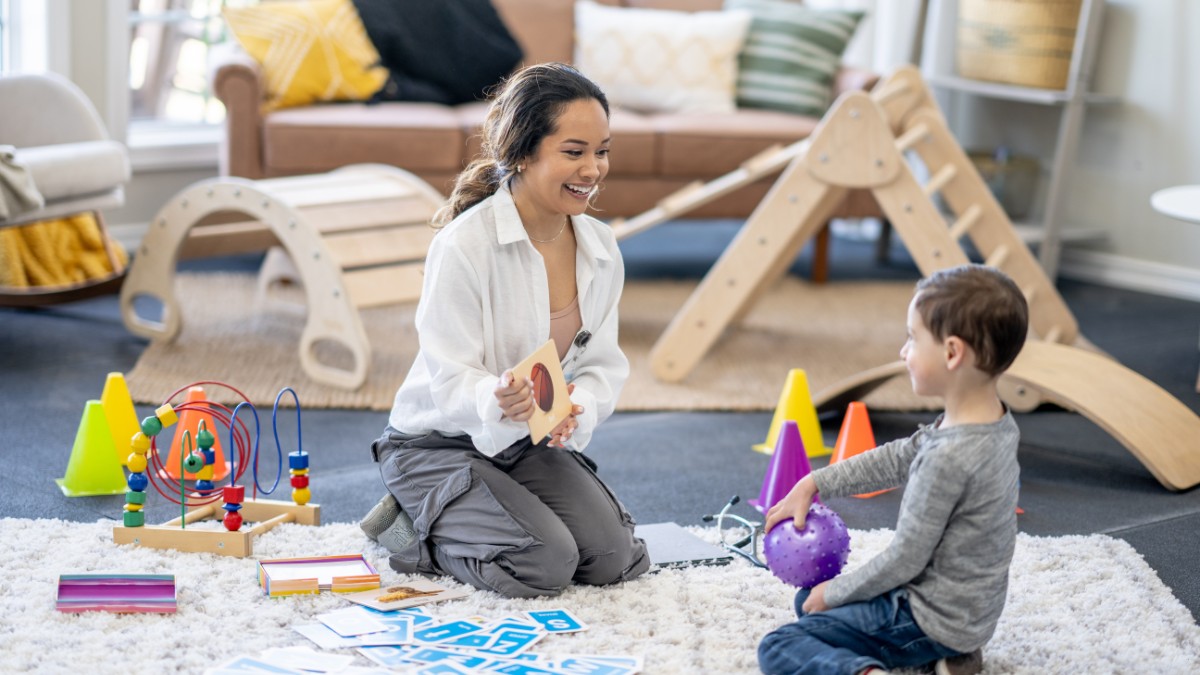
- Warm-up and rapport-building: Your therapist may start with a fun, low-demand activity to help your child feel comfortable and engaged.
- Skill-building exercises: This includes targeted tasks based on your child’s treatment plan, such as requesting preferred items, following simple instructions, or tolerating a new routine.
- Natural environment training (NET): Skills are practiced in everyday contexts—like brushing teeth in the bathroom or setting the table at lunch.
- Behavior tracking and data collection: The therapist takes structured notes to track your child’s progress and adjust strategies as needed.
- Parent training and involvement: You’ll often have a role in reinforcing skills between sessions or observing how to respond to specific behaviors.
In-home ABA isn’t just about what your child learns during the hour—it’s about building patterns of success that last well beyond therapy time.
Who’s Involved in Your Child’s ABA Program?
ABA therapy is never a one-person show. It involves a team that works collaboratively to guide your child’s progress.
Typical team members include:
- Board Certified Behavior Analyst (BCBA): This is the clinical lead. The BCBA designs your child’s individualized treatment plan and supervises the behavior therapists who carry it out.
- Registered Behavior Technician (RBT) or ABA therapist: This is the professional who comes to your home regularly to work directly with your child.
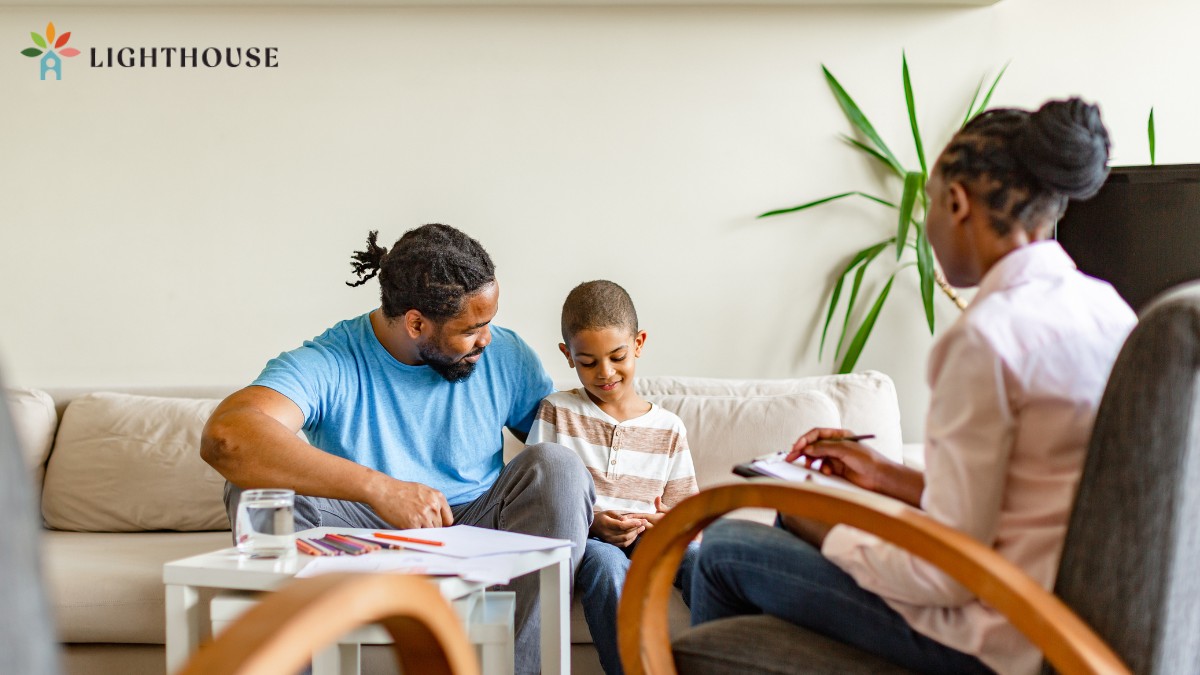
- You, the parent or caregiver: Your insights, consistency, and involvement are absolutely essential. A good therapy team will always make space for your questions, concerns, and feedback.
At Lighthouse, we make sure that this collaboration is clear and strong. Your therapist isn’t just showing up to check a box—they’re a partner in your child’s developmental journey.
Key Benefits of In-Home ABA Therapy in NYC
In-home ABA isn’t just a matter of convenience—it also provides several clinical and emotional advantages, especially in a complex, overstimulating city environment.
Some of the biggest benefits include:
- Familiar environment = less anxiety
Many children with autism struggle with sensory overload. Your home provides a controlled, familiar space where your child feels safe and settled, making it easier to engage and learn. - Real-time application of skills
Therapists can teach skills in the moment as they arise—whether it’s handling a tantrum during a meal or encouraging functional communication when a sibling takes a toy. - Stronger family involvement
Since sessions happen at home, caregivers can observe and learn strategies firsthand. This leads to better generalization of skills and a stronger support system for the child. - More consistent scheduling
Avoiding traffic and subway delays means fewer missed sessions, and better consistency usually leads to more stable progress. - Tailored to urban life
Therapists can help your child work through challenges unique to city living—like navigating crowded sidewalks, handling elevator waits, or coping with sirens and street noise.
What Should Parents Do to Prepare for In-Home Therapy?
The idea of welcoming a therapist into your home multiple times a week can feel overwhelming at first. But preparation doesn’t need to be complicated. Here’s how to set your family up for success:
1. Designate a calm therapy space
It doesn’t need to be a dedicated room—just a quiet area with limited distractions. This helps your child know what to expect and can increase focus.
2. Communicate openly with your therapist
Share what’s working (or not), ask questions, and speak up about any family routines or cultural needs. Therapy should fit your life—not the other way around.
3. Follow through between sessions
If your therapist shows you a new strategy—like prompting your child to request help—try to use it during daily routines. Consistency is key.
4. Be patient and trust the process
Progress in ABA therapy is often slow and steady. Celebrate the small wins, and keep an open mind.
How We Support Families Through In-Home ABA at Lighthouse
As a provider of top-rated ABA therapy services in New York, we understand the rhythm of city life—and the unique needs of families raising children with autism. Our in-home programs are tailored to fit your home, your child, and your goals.
We start by listening. From our intake coordinators to your assigned BCBA, our team is here to guide, educate, and collaborate—not just deliver therapy. We make sure your therapist is a good match and that your treatment plan is realistic, culturally sensitive, and focused on skills that actually make a difference in your daily life.
Our families appreciate that in-home therapy allows them to stay actively involved, witness the milestones firsthand, and implement strategies that extend beyond the session. For many, it becomes more than therapy—it becomes a relationship built on trust, growth, and shared wins.
Final Thoughts: ABA Therapy Is More Than a Service—It’s a Partnership
In-home ABA therapy in NYC is about meeting your child where they are—literally and developmentally. It’s about bringing support into your daily life so progress isn’t limited to a clinic or classroom. Whether your child is just starting their autism journey or has been receiving support for years, in-home ABA can be a pivotal tool for long-term growth.
Get in touch today to learn more about how ABA therapy in New York through Lighthouse can fit into your family’s routine. We’re here to walk with you, every step of the way, with a program that prioritizes your child’s strengths, your goals, and your everyday realities. Let’s build meaningful progress—right from home.