
Key Points:
- Social skills activities for autism focus on structured, engaging tasks that support interaction, communication, and emotional understanding.
- Effective strategies include role-play, emotion recognition games, visual supports, and peer-mediated activities.
- Regular practice, motivation, and variety help generalization and make learning feel meaningful.
Studies show that around 50% of autistic individuals experience social anxiety, which can make interacting with others especially challenging. Building social skills is often difficult for children with autism, but it’s also one of the most rewarding areas of growth, leading to better relationships and increased independence.
The activities below give parents and therapists practical ways to support children in navigating everyday social situations. With consistent practice, these strategies help children move beyond isolated improvements and develop real, lasting social confidence.
What are Social Skills Activities for Autism?
Social skills activities for autism are structured exercises and games designed to teach children with autism how to interact, communicate, read social cues, and engage with peers. These activities occur in small groups or one-on-one and are tailored to build pragmatic language, turn-taking, and emotional recognition.
They support essential social competencies—like greeting others, starting conversations, and understanding others’ feelings—helping children succeed in school, at home, and in the community.
Why are Social Skills Activities Effective?
Social skills activities are effective because they offer structured, consistent practice in real-life scenarios, helping children with autism understand and apply social rules. These activities break complex interactions into manageable steps.
By using repetition, modeling, and reinforcement, social skills activities improve communication, emotional awareness, and peer relationships. Over time, they build confidence and promote greater independence in social settings like school, home, and the community.
What are Interactive Games That Teach Turn-Taking?
Interactive games turn learning into engaging practice. They combine fun with structured social interaction. Before listing games, it’s important to note their effectiveness: these activities address impulse control, waiting, sharing, and attention—building blocks of teamwork and communication.
Examples include:
1. Simon Says
This classic game promotes self-regulation, listening skills, and following directions—all essential for successful social interaction and impulse control.
2. Board Games
Simple turn-based games like Candy Land or Chutes and Ladders help children practice rule-following, waiting patiently, and responding to others’ moves appropriately.
3. Ball Toss Name Game
Children take turns tossing a ball while saying a peer’s name, reinforcing social attention, name recognition, and respectful communication.
4. Token Stack Conversation Game
Kids earn tokens for speaking in turn during group conversations, teaching them how to listen, wait, and contribute meaningfully.
5. Scavenger Hunts
Working in teams to follow clues and find items encourages cooperation, shared goals, and problem-solving—key elements of group interaction.
These games foster genuine social interaction in enjoyable, low-pressure ways.
How Can Parents Teach Emotion Recognition and Regulation?
Understanding emotions is key to social interaction. Many children with autism struggle to interpret facial expressions or body language. These activities build emotional awareness in practical ways.
Before listing tools, it helps to know these methods are backed by research showing they improve emotion recognition and communication strategies.
Tools include:
1. Emotion Charades
Children act out emotions like happy, sad, or angry while others guess, helping build expression recognition and emotional vocabulary in a fun, interactive way.
2. Face Games
Mirroring facial expressions strengthens a child’s ability to recognize and interpret nonverbal cues, supporting empathy and emotional understanding in social settings.
3. Emotion Cards
Used in matching or naming games, these cards help children identify feelings, expand emotion-related language, and build greater emotional self-awareness.
4. Calm-Down Kits
These kits, often used with visuals or emotion cards, help children connect specific emotions to calming strategies, promoting self-regulation and emotional control.
These exercises teach children to identify emotions in themselves and others—building confidence and reducing meltdowns.
 What Role Does Video and Peer Modeling Play?
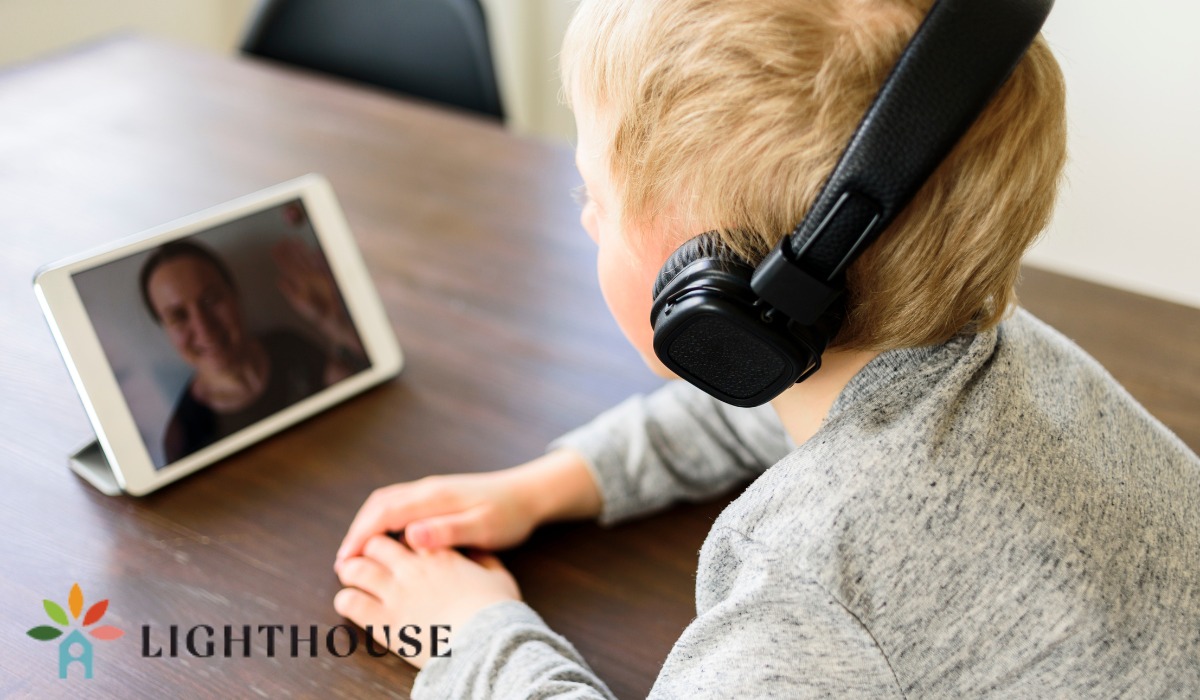
Modeling is a powerful way to teach social skills. Children learn by observing peers or video examples. Video-mediated modeling, especially, has strong evidence supporting its use in autism interventions. It’s effective for teaching greetings, play routines, and emotional understanding.
Key modeling activities include:
1. Video Modeling
Children watch short clips of peers demonstrating social behaviors—like greetings or sharing—then practice the same actions. This visual approach helps break down complex skills into clear, repeatable steps.
2. Peer Modeling
A peer performs a social behavior in real time, such as initiating play or joining a group. The child then observes and imitates, promoting natural learning and real-world application.
3. Social Narratives
These illustrated or written stories describe specific social situations, expected behaviors, and emotions. They serve as clear, consistent scripts that help children understand what to do and how to react.
Modeling provides concrete examples, making abstract social skills more accessible.
How to Structure Group-Based Social Activities
Peer groups offer natural, meaningful contexts for learning. Structured group settings balance guidance with real interactions. Key elements to structure group activities include planning specific social goals and rotating roles to ensure equal practice.
Group activity examples:
1. Icebreaker Circles
Children sit in a circle and take turns introducing themselves and sharing a fact, helping reduce anxiety and build confidence in group settings.
2. Role-Play Scenarios
Small groups act out everyday social situations—like asking for help or joining a game—followed by discussion to explore feelings and appropriate responses.
3. Collaborative Projects
Working together on shared tasks like building block towers or creating group artwork encourages teamwork, communication, and shared problem-solving.
4. Team Games
Games requiring cooperation—such as relay races or group ball-passing—foster turn-taking, strategy sharing, and mutual encouragement in a fun, goal-oriented environment.
These group activities incorporate real social give-and-take with structure and support.
How Can Parents Reinforce Social Learning at Home?
Generalization across settings is critical. Practicing at home builds consistency and brings skills into daily life. A solid home plan includes setting real-life goals, modeling desired behaviors, and practicing with siblings or friends.
Home-based supports include:
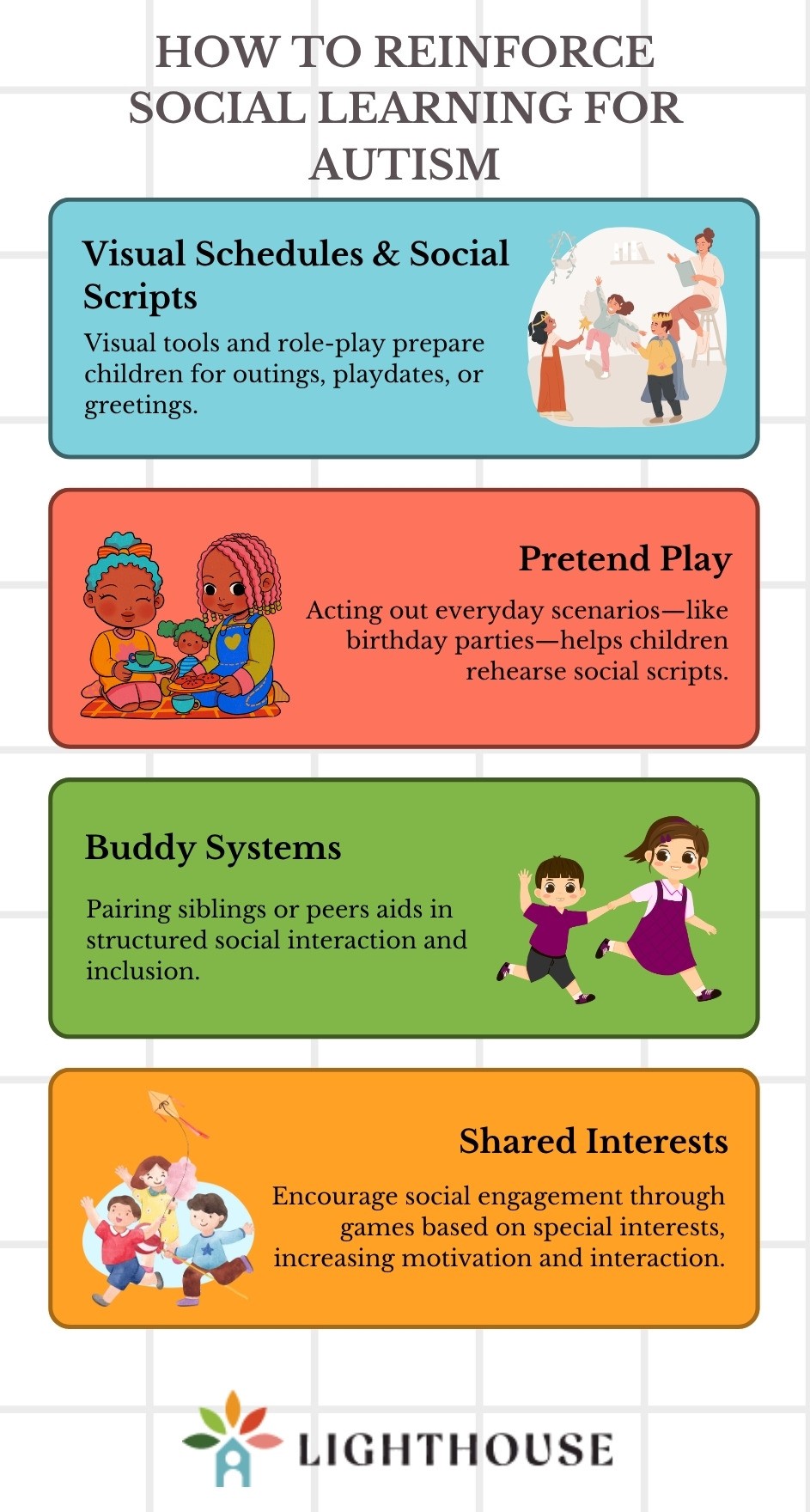 Parents are key in helping children adapt social learning to real social contexts.
What are Tips for Effective Activity Selection?
To select effective social skills activities, match the child’s developmental level, interests, and learning goals. Choose activities that are engaging yet challenging enough to promote growth without causing frustration or withdrawal.
Prioritize structure, opportunities for repetition, and real-life relevance. Activities should target specific social skills—like turn-taking or emotional recognition—and be adaptable across different settings. Collaborating with therapists ensures that activities align with broader intervention plans and meet the child’s unique needs.
Guide Your Child Toward Independence With ABA Therapy
At Lighthouse, we design personalized social skills activities rooted in ABA best practices. From emotion charades and video modeling to peer-group sessions and role-play, we help children build connections through engaging, evidence-based experiences.
We offer ABA therapy in New York City, with a focus on practical social learning that extends from our sessions to your home and community. Reach out to us to discover how we can support your child’s social growth with effective, tailored social skills activities they will enjoy and carry into real life.