

Key Points:
- Discrimination training helps children recognize differences between stimuli, improving their ability to make correct choices, follow instructions, and build stronger learning and communication skills.
- It strengthens cognitive flexibility and independence by teaching children to generalize learned behaviors across different settings like home, school, and social environments.
- Caregivers and teachers can support progress by offering consistent practice, clear cues, and positive reinforcement to strengthen discrimination skills beyond therapy sessions.
Learning to make choices is a foundational part of growth. For children, especially those receiving behaviour-based interventions, being able to recognise subtle differences and select the right option can make a big difference in how they navigate school, home and social life. This article explains how discrimination training in Applied Behaviour Analysis (ABA) teaches this vital skill, why it matters, and how caregivers and educators can support it. You’ll gain practical understanding, not technical jargon, and real insight into what this training does, how it’s implemented and why it influences learning and independence.
Understanding Discrimination Training
An overview of what discrimination training is and how it fits into behaviour-analysis therapy.
Definition and Purpose
Discrimination training is a process where a child learns to distinguish between two or more stimuli and to respond appropriately to one but not the other. In simpler terms, it means teaching a child “this is the correct option” versus “that is not the correct option” in a given context. A key element is the discriminative stimulus (SD), that signal which cues “do this now”, and the SΔ (stimulus delta) which signals that “not this one”.
Why It Matters for Learning and Life
When children can discriminate correctly, they build a foundation for many other skills. They learn to follow instructions, to sort objects, to recognise cues (such as colours, shapes, words) and to make choices that fit a situation. In everyday life this translates into picking the right utensil, following a “stop” sign, choosing the correct answer, skills most of us take for granted. Discrimination training thus supports independence and successful engagement with the environment.
 Key Components of Discrimination Training
A breakdown of the elements that make discrimination training effective.
Discriminative Stimulus (SD) and Its Role
The SD is the signal or cue that tells the learner “this is the time/this is the item you should respond to”. For example, within a tray of objects the instructor might ask “Which one is the banana?” and the banana becomes the SD for that task.
Response Options and Reinforcement
Once the SD is presented, the child must respond, by pointing, selecting, naming, etc. Reinforcement (praise, token, preferred activity) is given when the correct response occurs in the presence of the SD. If the child responds to the SΔ or the wrong stimulus, reinforcement is withheld or an error correction is applied. Through this differential reinforcement the correct behaviour is strengthened and the incorrect one is weakened.
Presentation and Practice of Stimuli
Successful discrimination training hinges on how stimuli are introduced and varied. The process typically involves:
- Introducing the SD (and sometimes SΔ) in a controlled way.
- Presenting them simultaneously (or in quick succession) so the child must choose between options.
- Gradually increasing difficulty, adding more items, making stimuli more similar, varying context.
- Practicing in multiple contexts to promote generalisation.
Types of Discrimination Training
There are different forms:
- Simple discrimination: Two stimuli, one correct, one incorrect (e.g., red ball vs. blue ball).
- Conditional discrimination: More complex, involves several stimuli and contextual cues (for example depending on background, you choose one object versus another).
- Stimulus equivalence / relational discrimination: Linking different forms of the same concept (for instance photo, word, toy for “dog”) so the child recognises equivalence across modalities.
 How It’s Applied in Daily Life and Learning Settings
Exploring real-world applications to help understand how this training matters for children’s development.
Object, Colour and Shape Discrimination
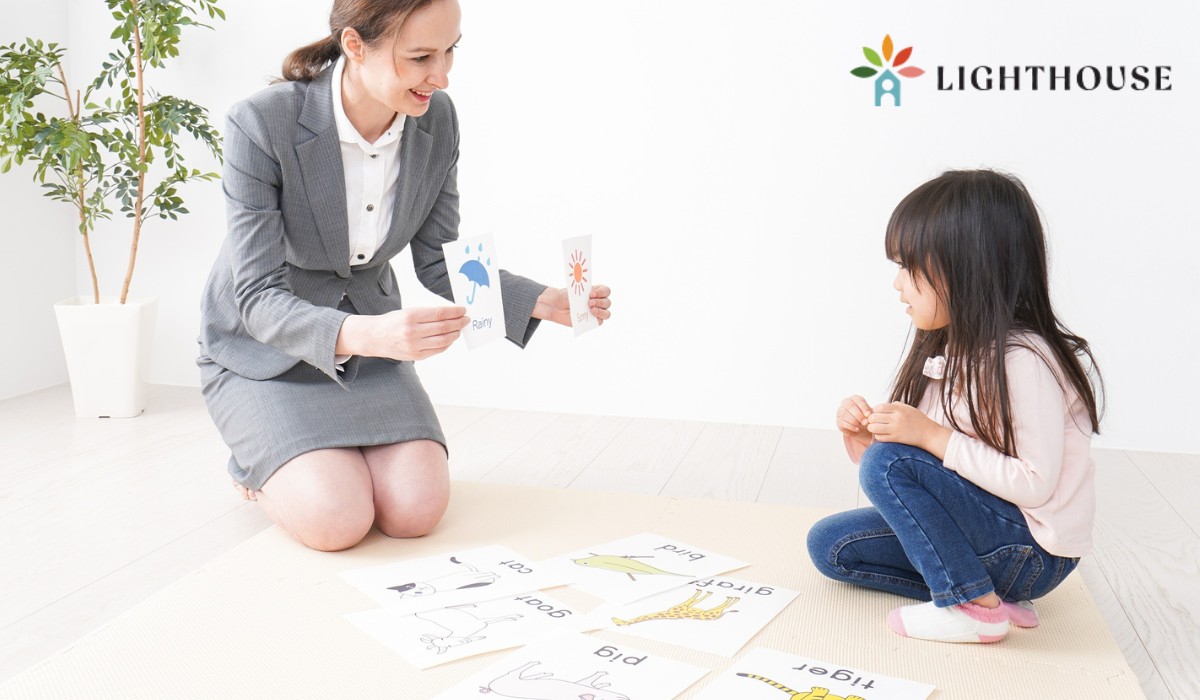
In early learning, a common use is teaching a child to pick a red circle out of others, or identify a banana among fruits. The therapist presents a tray with two or three items: the target (SD) and non-targets (SΔ). As the child masters it, more items or more similar items are added to deepen the challenge. This kind of discrimination supports sorting, categorising, identifying in school settings (e.g., math worksheets, worksheets, matching games).
Language and Communication Discrimination
Discrimination training helps children learn to respond to verbal instructions (which object to pick, which picture to point to) or to distinguish between words or sounds. For example, “Which is a dog?” when there is a toy dog and toy cat. Correct response earns reinforcement; incorrect doesn’t. This supports receptive language and comprehension. It also supports expressive tasks when children learn to label correctly after discrimination tasks.
Social and Daily Living Skills
Beyond academics, discrimination training underpins daily choices: selecting correct clothing items (which sock is clean?), recognising contextual cues (raise hand in classroom vs. speak out of turn). Recognising social cues (smile means friendly, frown means something else) is another layer of discrimination. A child who can discriminate well is more flexible, engages more successfully with peers, and behaves more appropriately across settings.
Behaviour Management and Decision Making
When children can discriminate between “appropriate behaviour in this situation” and “not appropriate behaviour,” they can replace problem behaviours with more adaptive ones. For instance, recognising that shouting out is not rewarded but raising hand is (SD). This ability reduces unwanted behaviour, improves classroom participation, and fosters independence.
 Supporting Discrimination Training at Home and School
Guidance for caregivers and educators to embed this training beyond therapy sessions.
Make the Environment Rich in Clear Choices
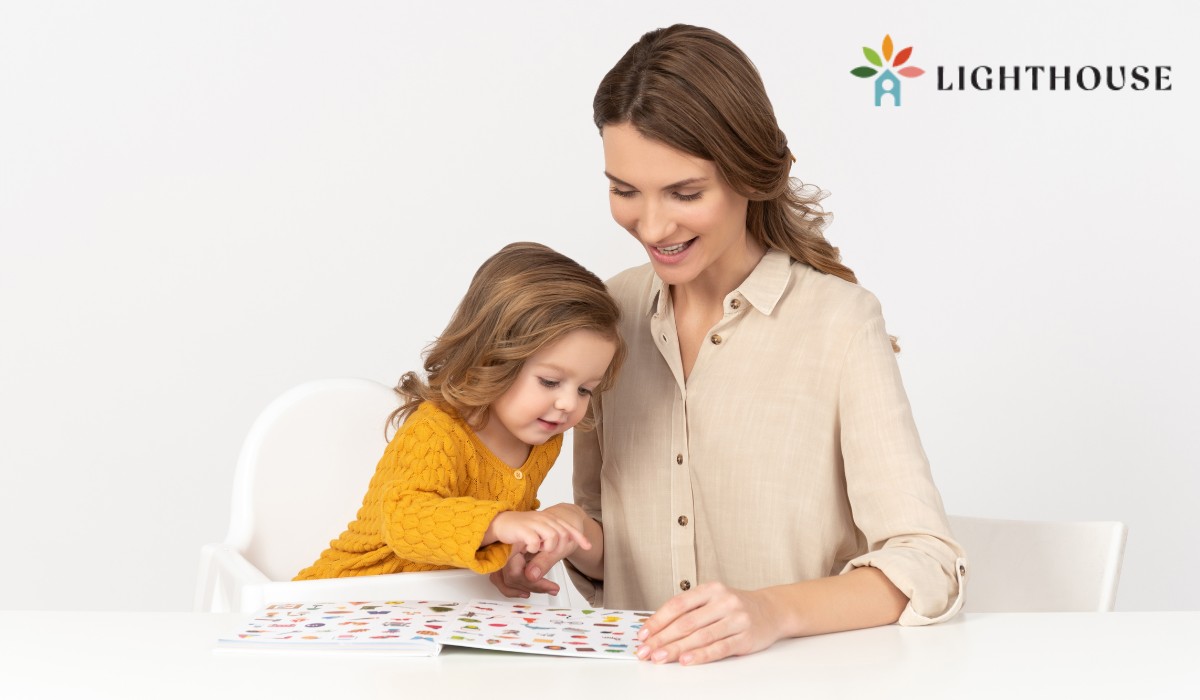
Provide opportunities where the child must make a choice between distinct stimuli. At home, offer two well-differentiated objects (“Do you want the red cup or the blue cup?”). Ensure the instruction is clear and the correct choice is reinforced consistently. The clearer the difference between options, the easier the initial discrimination. Over time, subtle differences can be introduced.
Use Consistent Reinforcement and Clear Feedback
When a correct response occurs in the presence of the SD, deliver immediate positive reinforcement (praise, favourite item, sticker). When the response is incorrect (choosing the wrong item or responding when SΔ is present), gently correct and provide a prompt or modelling of the correct response. Then fade prompts as the child becomes more fluent. Consistency builds the link between cue + correct response + reward.
Vary the Context to Promote Generalisation
Once the child reliably discriminates in a familiar setting, vary the stimuli, location, or context. Use different objects, colours, sizes, settings (living room vs. classroom), or even people delivering the instruction. This ensures the skill carries over beyond one routine or therapist. Without generalisation, the skill may remain rigid.
Gradually Increase Difficulty
Start with easily distinguishable stimuli (e.g., red vs blue). Once mastered, move to more similar items (e.g., red vs maroon), add additional distractors, or integrate choice into real-life tasks (choosing between two outfits, or sorting laundry). Stepping up difficulty ensures growth and avoids plateauing.
Embed Discrimination into Daily Routines
Analyze everyday routines for discrimination opportunities: snack time (“Which snack do you want?”), clean-up time (“Which toy goes in this box?”), peer interactions (“Who is sitting quietly now and can earn play time?”). These routine opportunities reinforce the training naturally and help children see relevance beyond therapy sessions.
 Common Challenges and How to Overcome Them
Understanding what may slow progress and practical steps to address them.
Failure to Distinguish Stimuli
If stimuli are too similar too soon, the child may respond incorrectly. The remedy is to simplify the task, increase the contrast between stimuli, reduce the number of choices, then gradually increase complexity. Ensuring the SD is salient helps.
Insufficient Reinforcement or Prompting
If correct responses are not consistently reinforced, or if the child lacks prompts during early learning, the discrimination may not take hold. Use consistent reinforcement and prompt high rate of correct responses early on, then fade prompts to promote independence.
Lack of Generalisation
A child may perform well in therapy but fail to apply discrimination in new settings. To avoid this, vary contexts, settings, materials and people. Practice in real life. Without this, the skill remains context-bound and limited in usefulness.
Motivational and Engagement Issues
If the task is boring, too difficult or lacks meaningful reinforcement, the child may disengage. Use preferred items, interest-based choices, keep sessions short and lively, and ensure reinforcement is meaningful to the child. Motivation fuels learning.
Over-correction or Frustration
When error correction becomes harsh or repetitive, the child may become frustrated or avoid the task. Use errorless teaching (prompts, fade gradually) and gentle feedback rather than punitive correction. Create a positive learning experience.
Fostering Understanding Through Discrimination Training in ABA
Discrimination training is an essential part of ABA therapy that helps children distinguish between different cues, situations, or behaviors, building the foundation for better communication, safety, and learning. It empowers children to recognize patterns, make choices, and respond appropriately to their surroundings.
At Lighthouse ABA, our therapists use evidence-based discrimination training techniques tailored to each child’s developmental level and goals. Through engaging activities and consistent reinforcement, we help children gain clarity and confidence in how they interact with the world around them. This approach not only enhances daily functioning but also supports emotional growth and independence. Families throughout New York and North Carolina trust our team to deliver compassionate, results-driven ABA care. If you’re ready to strengthen your child’s learning and understanding, connect with Lighthouse ABA today to begin your personalized program.